





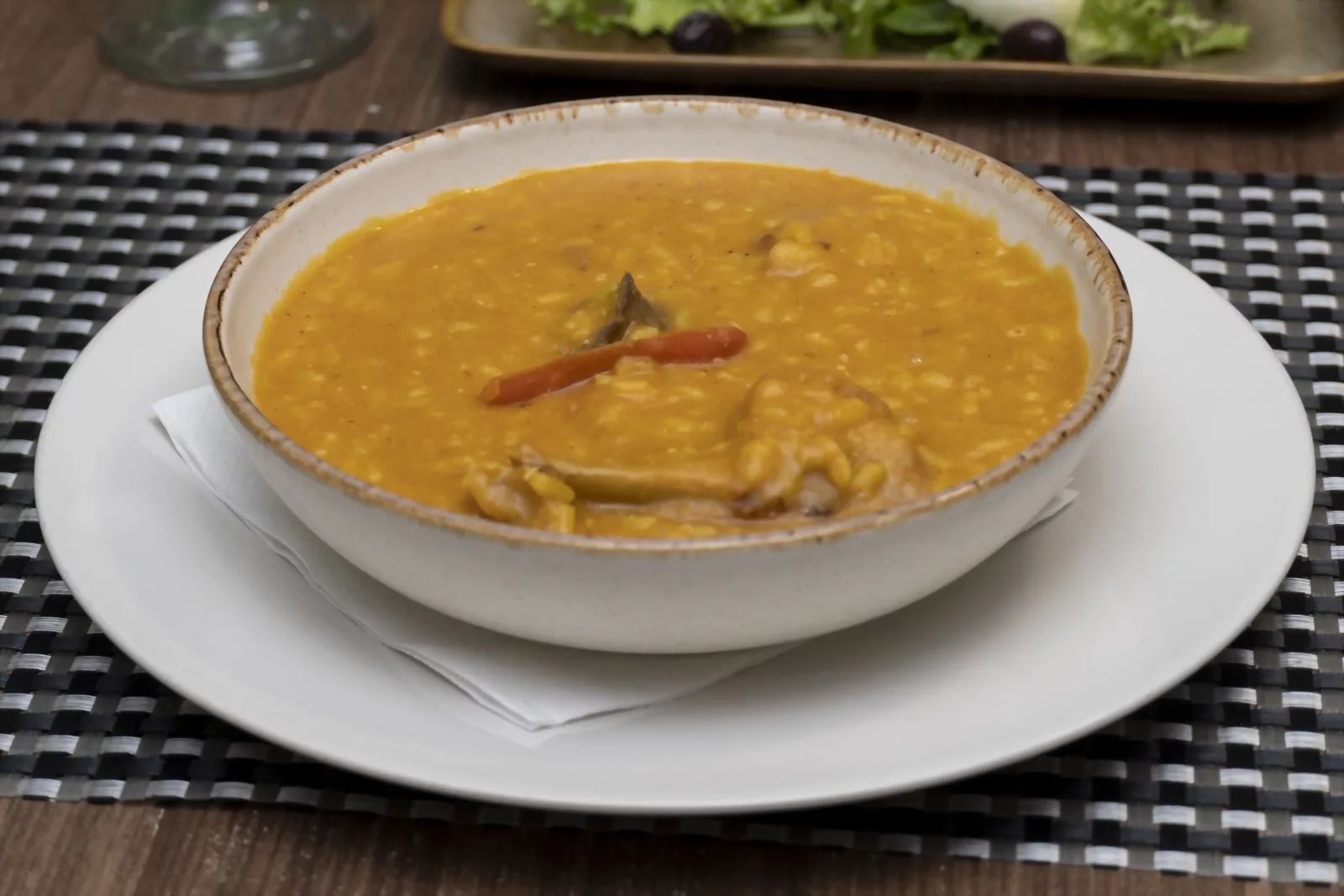
THE EMPEDRAO
A dish with hunter's roots...
This dish, traditionally prepared by hunters, owes its unique name to its visual appearance. Historically, the beans were left completely whole rather than mashed, giving the rice a textured, stone-speckled look that resembled a cobblestone pavement (empedrat).
Furthermore, it was custom to eat it directly from the same communal clay pot, accompanied by a fresh salad of spring onions or dried onions, depending on the season. A traditional wooden spoon was used, and the eldest person at the table was in charge of calling out the ritual phrase: “va de tros” (time for a piece). This was the signal that allowed everyone to take a piece of meat at that exact moment, a clever rule ensuring that sharing was fair. It is important to remember that during those times of severe food shortages, every bite was carefully measured.
Ingredients
- Rabbit (chopped)
- Pork ribs (chopped)
- Chicken (chopped)
- 1 kg of white beans (pinto or haricot)
- 500 g of rice
- Grated tomato
- Garlic
- Saffron threads
- Salt
- Olive oil
- Water
Preparation
First, heat the olive oil in a traditional wide pan, ensuring it is hot before adding the pork ribs, chicken, and rabbit.
Sauté the meat thoroughly until it develops a deep, golden-brown color, which is the perfect moment to stir in the grated tomato. Next, pour in enough water to completely submerge all the ingredients and season with salt to taste. Add the saffron threads and let the broth simmer and develop its rich flavors for about 30 minutes. Once the broth is ready, add the rice and let it cook over medium heat.
Meanwhile, prepare the beans. To preserve the authentic character of the traditional dish, ensure the white beans remain whole and tender, ready to be integrated into the rice.
Keep a close eye on the rice. A few minutes before it reaches its perfect cooking point, perform the final step: add the whole beans to the pan, stirring gently to integrate all the components and prevent the rice from sticking to the bottom.
And right here lies the secret to this dish: achieving the perfect texture—neither too soupy nor too dry. Mastering this delicate balance depends largely on the skill and experience of the cook.