



HISTORICAL DATA OF OUR MOST EMBLEMATIC CAVE
The Sant Josep area
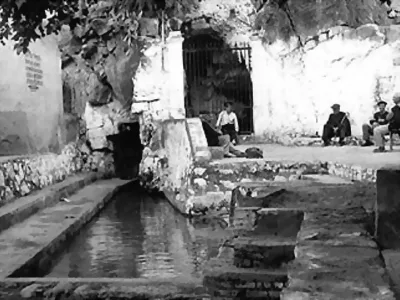
The Sant Josep area has traditionally been a popular gathering place and leisure hub, particularly for the local community.
Efforts to enhance this natural space date back to the early 20th century. During this period, the first streetlights were installed, and charming kiosks began offering cold refreshments to the town’s visitors.
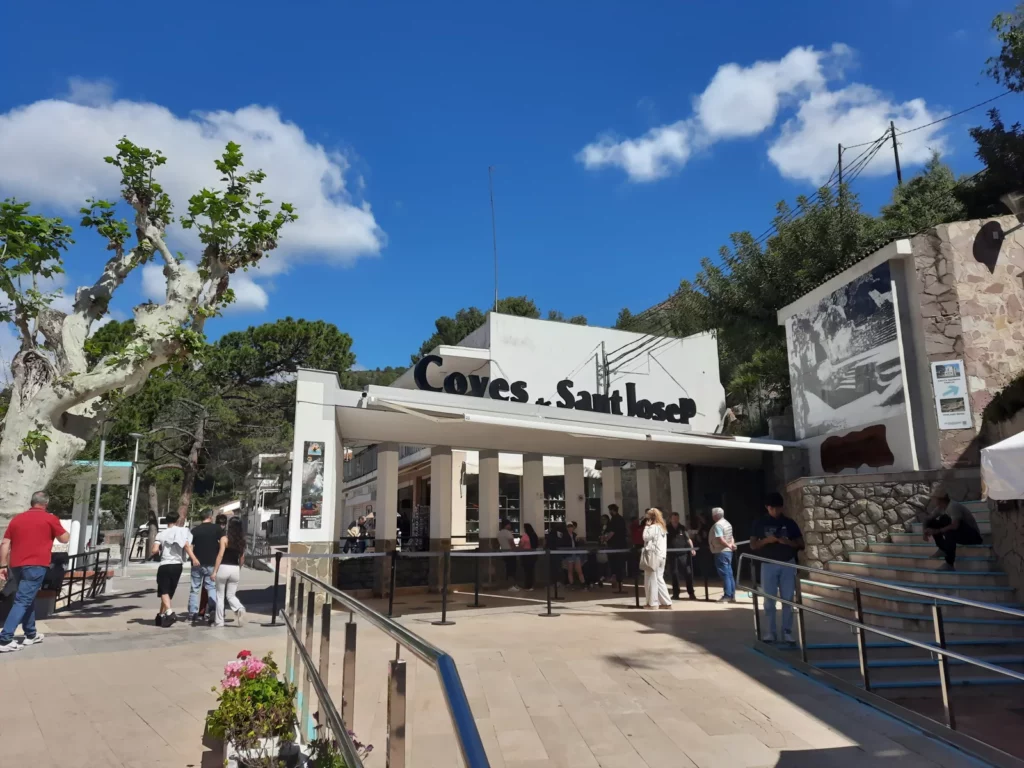
The town’s inhabitants took advantage of every opportunity to enjoy a stroll with friends and family, gathering for picnics, lunches, and traditional afternoon snacks in the area—especially on key dates such as Easter or during the Patron Saint Festivities of the Sagrada Família in October. On these excursions, it was quite common to venture into the cave, either out of mere curiosity or as a test of bravery, which occasionally resulted in minor mishaps and scares due to stumbles in the pitch darkness.
Given these risks, a gate was installed at the entrance to prevent unauthorized access and potential accidents. It was also during this early 20th-century period that the local master builder Paco “l’obrer” (Francisco Daròs) was commissioned to construct the staircase connecting the cave entrance to the Ermita de la Sagrada Família.
The exploration of the cave
The spring at the Font de Sant Josep has been used since time immemorial. It is no wonder that there are remains of human occupation dating back to the Upper Paleolithic, approximately 17,000 years ago. At that time, prehistoric groups inhabited the area’s caves—an environment that would have been vastly different from today’s—and relied on the fresh water flowing from the underground river of the Coves de Sant Josep.
Although diverse cultures have passed through this cave—from Paleolithic hunter-gatherers to Iberians and Romans—and its entrance even served as a shelter during the Spanish Civil War, the true depths of the cave remained closely guarded. For thousands of years, the river’s flow and the complex underground siphons created by water erosion kept the cave’s inner secrets completely hidden from the world.
First foray into the cave
It is worth noting that the first documented technical exploration to successfully pass through the Boca del Forn—the first underground siphon, located about 100 meters from the pier—was carried out at the end of 1897 by the Valencian engineer José Gimeno Lassala. This incursion was commissioned by the town council, which sought a study to optimize the underground river’s flow for drinking water and agricultural irrigation, as well as to analyze the spring’s water quality. To achieve this, with the help of a boatman from the Almenara marshlands, they aimed to find a deeper point from which to draw water. It was then, according to the official report preserved in the municipal archives, that the engineer overcame the first siphon and arrived “where no human had gone before.” Until that moment, there was no record of anyone ever successfully breaching that natural barrier: the Boca del Forn.
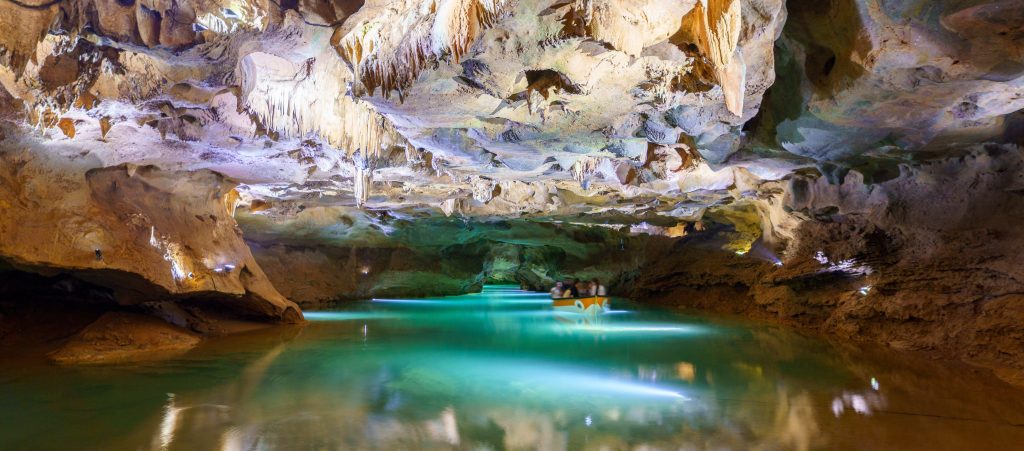
From that moment on, drawn by the immense curiosity it aroused, many adventurous locals tried to venture into the cave by boat. It is even said that some, using makeshift wooden plank walkways, attempted to penetrate a few dozen meters just to catch a glimpse of the cavern and the thousands of bats that inhabited it, though none ever managed to bypass the first natural obstacle: the siphon at the Boca del Forn.
In the mid-20th century, the first electric lighting system was installed inside the cave. Until then, anyone who dared to explore its depths did so by the flickering light of torches. The new illumination, initially intended to facilitate speleological research, soon encouraged early tourists to visit the Bat Chamber, where they gazed in awe at the massive colony of thousands of bats.
During this period, the narrow bottleneck of the Boca del Forn—a siphon previously impassable by boat—was carefully excavated to allow a small canoe to slide through, opening the door to the exploration of new galleries carved out by the underground river.
The first visitors to the Caves of Sant Josep
Whenever a VIP or distinguished guest visited, the entrance gate would be opened specifically so they could view the spring from the inside. At that time, a rudimentary wooden platform had been constructed leading to the Bat Chamber where, by the dim light of a few bulbs, visitors could observe the massive colony of these flying mammals clinging to the cavern’s ceiling. At the end of the guided walk, the gate was locked once more, leaving the grotto sealed off and in complete darkness for months at a time.
A visit soaked by rain
An emerging tourism sector
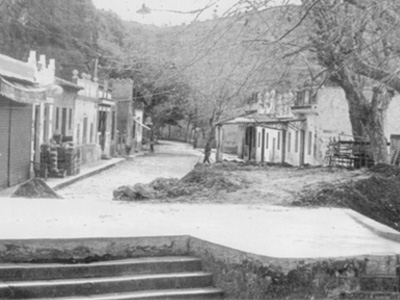
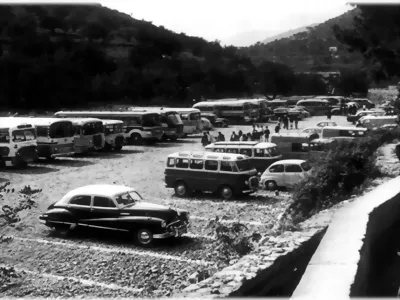
It was not until well into the 1950s, fueled by families’ increasing access to private cars, that the area began to emerge as a popular tourist destination, initially attracting local and regional visitors. However, no one in the municipality had yet envisioned the true, transformative potential of the cave.
During the torrential rains of October 1956, the underground river swelled to an exceptional level, completely destroying both the electrical installation and the wooden walkway leading to the Bat Chamber. Following this disaster, plans were announced for an unprecedented exploration that would take place the following summer to find out the origin of the spring.
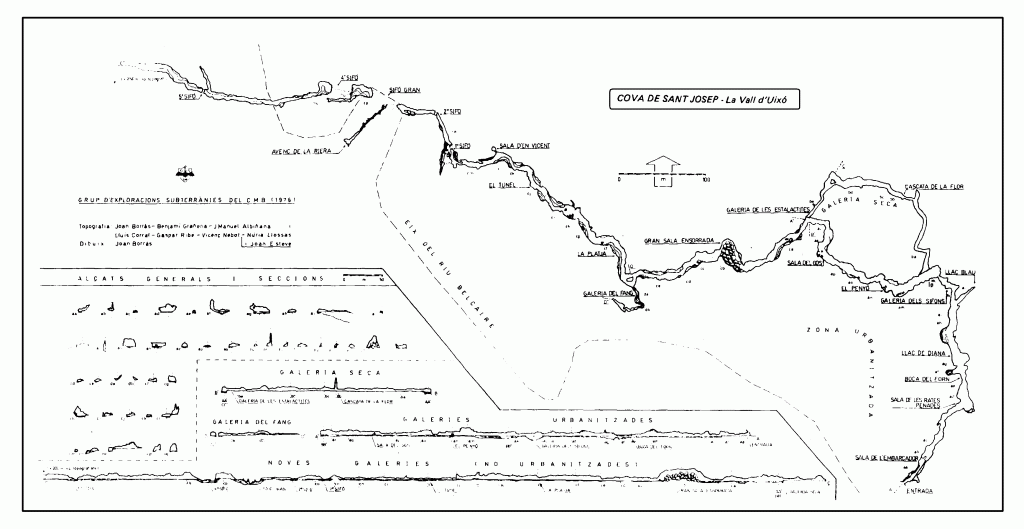
In 1958, the first topographic map of the cave was meticulously drawn up by the Centro Excursionista de Valencia. Around this time, pioneering efforts began to extend the tour beyond the initial gallery (the Bat Chamber). Although boat tours were not yet envisioned due to the complex morphology of the cave, several projects were outlined to build swimming pools, children’s play areas, restaurants, and other amenities to enhance the appeal of the Sant Josep Natural Area for tourists.
To expand the space for the boat tours, the narrow bottlenecks were widened using dynamite, and the underground river was temporarily drained to clear out debris and rocks. From this point on, tourist visits grew exponentially, surging from over 3,000 visitors in 1960 to 20,000 the following year. This number doubled in 1962, prompting Valencian travel agencies to include the site in their regular excursion itineraries. Following this resounding success, a complete overhaul of the site’s infrastructure was commissioned: the design of the new lighting system was entrusted to the prestigious Catalan engineer Carles Buïgas, known as “the Wizard of Light,” who skillfully illuminated the stunning limestone formations and underwater landscapes.
In subsequent years, exploration of the cave forged ahead, leading to the completion of the navigable tourist route. In the summer of 1969, the path reached its current length with the official opening of the Dry Gallery. Following a series of expeditions between 1971 and 1975 carried out by the OJE Speleology Group of Castellón and divers from the Club Muntanyenc de Barcelona, new galleries and siphons were discovered, successfully surveying a total of 2,348 meters of the cave system.
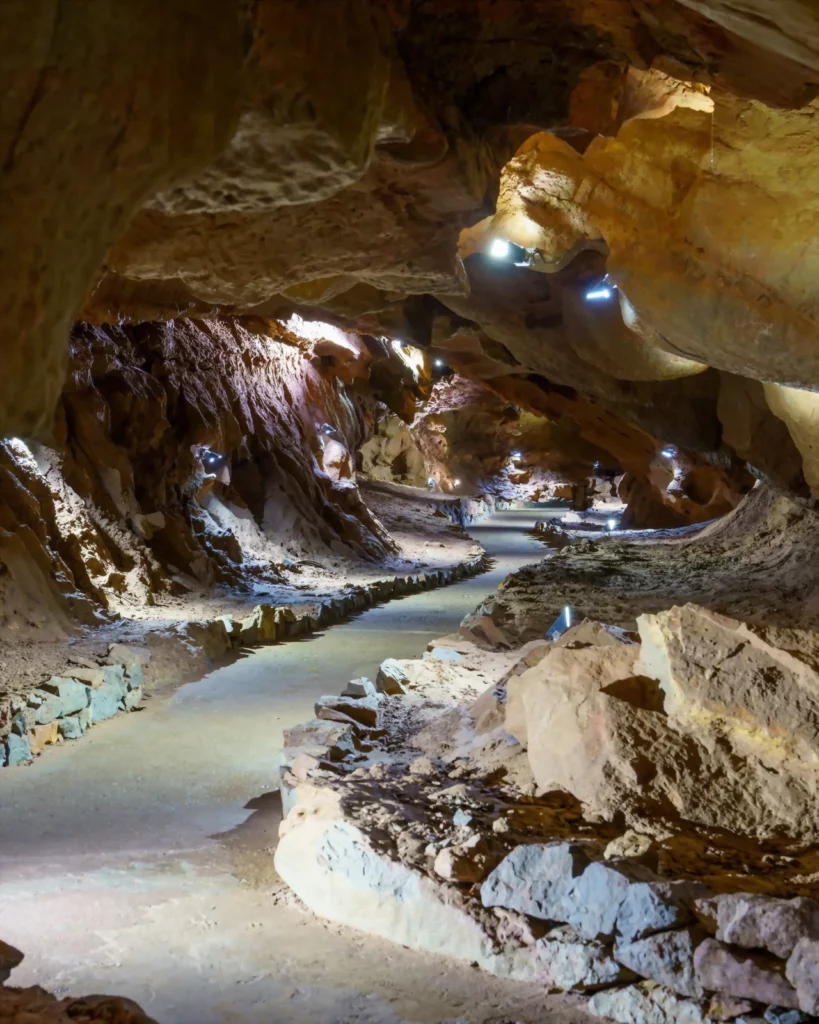
New discovery in the Caves of Sant Josep
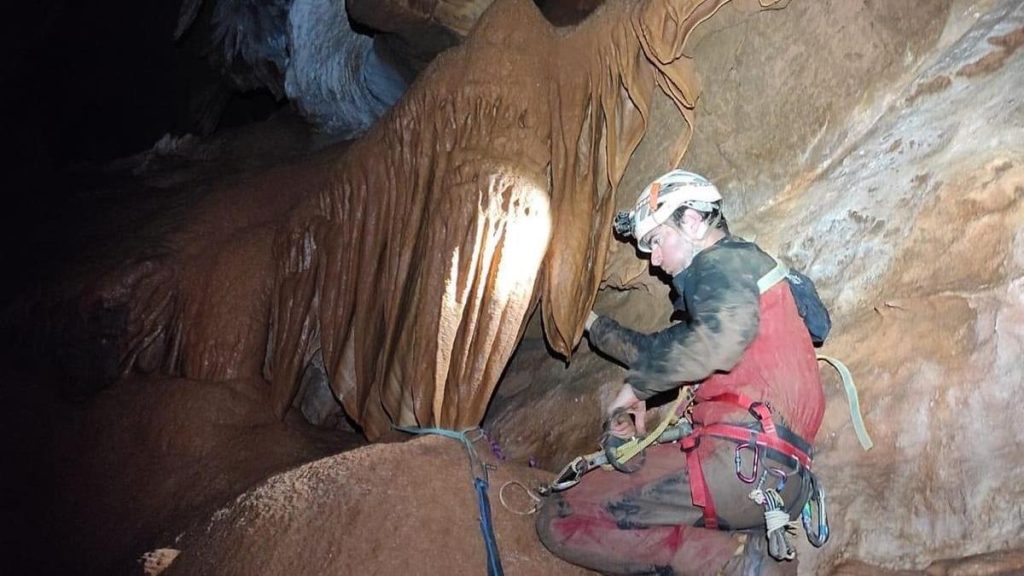
It is worth noting that the latest gallery was discovered in January 2023, when the Alto Palancia Underground Expeditions Group and the EOM Cave Diving Group, accompanied by the Espeleoclub La Vall d’Uixó, discovered a new chamber in the Coves de Sant Josep—the so-called Sala d’en Guillem, named in honor of its discoverer.