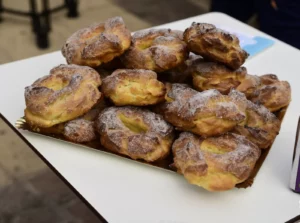






Sweet potato cakes or sweet potato pastries
A true autumn and winter tradition...
These turnover-style pastries, filled with sweet potato jam, are a staple in many municipalities across the Valencian Community. They are also popular throughout the rest of the country; for instance, in Andalusia, they are known as empanadillas de batata. In the provinces of Castellón and Valencia, they are traditionally called pastissos de Nadal (Christmas pastries) and, as their name suggests, they are a festive holiday essential. However, nowadays these delicious little cakes can be found year-round in any pastry shop or bakery in the city.
The sweet potato originated in Central and South America, but in the 16th century, it arrived in Europe and subsequently spread throughout the Old Continent due to its high nutritional value and naturally sweet taste. That is why it is so common to find it integrated into various sweet and savory recipes across our gastronomy.
Ingredients
- 75 ml of brandy or anise liqueur
- 75 ml of olive oil
- 35 g of sugar
- 250 g of flour
- 2 small sweet potatoes
- 1 egg (for the egg wash)
- Lemon zest
- 1 cinnamon stick
Preparation
The filling
- We begin this recipe by preparing the sweet potato filling, which must be completely cold before assembling the pastries. First, peel the sweet potatoes and cut them into small cubes.
- Bring plenty of water to a boil in a saucepan and cook the sweet potato cubes for approximately 15 minutes, or until fork-tender. The exact cooking time will depend on the size of the pieces.
- Drain the water thoroughly. In the same saucepan, mash the cooked sweet potato along with the fresh lemon zest. Add the sugar and the cinnamon stick, then cook the mixture over medium heat for about 10 minutes, stirring constantly to prevent the sugar from scorching.
- Remove the saucepan from the heat, discard the cinnamon stick, and let the filling cool completely. For best results, it is highly recommended to prepare the filling the evening before and leave it in the refrigerator overnight to chill thoroughly.
The dough
- To prepare the dough, combine the anise liqueur (or brandy) with the olive oil in a deep mixing bowl. Add the sugar along with a small amount of flour and stir well.
- Gradually add the remaining flour, little by little, while continuously stirring and kneading until a smooth, workable dough forms.
- Once the dough is ready, roll it out onto a lightly floured work surface using a rolling pin. It should be rolled thin, but not so thin that it tears when folded. Cut out rounds using a 10-cm circular cutter and gently remove the excess dough.
Final preparation of the sweet potato pastry
- Place a generous spoonful of the chilled sweet potato filling in the center of each dough circle and fold them over into a half-moon shape. Gently press the edges together and crimp them with a fork to seal. Repeat this process until all the dough is used.
- Arrange the sweet potato pastries onto a baking sheet lined with parchment paper or a silicone mat, and lightly brush the tops with beaten egg to achieve a beautiful golden glaze.
- Bake in the oven preheated to 200°C for 15 to 20 minutes, or until the pastries turn a beautiful golden brown. Remove the sheet from the oven and let them cool completely on a wire rack before serving.
Tips
- The amount of flour needed is approximate. If the dough feels too sticky or wet, you can gradually add a little more flour. Conversely, if it seems too dry or crumbly, incorporate a small splash of oil or anise liqueur. Always adjust in tiny increments to achieve the perfect consistency.
- If you prefer a sweeter finish, generously sprinkle the pastries with a mixture of sugar and ground cinnamon right after brushing them with the egg wash and just before placing them in the oven. This creates a beautifully crisp, caramelized sugar crust.
- Baking these traditional sweet potato pastries may seem like a lengthy process, but planning ahead by preparing the filling the day before makes it incredibly straightforward. Plus, the mouthwatering results are absolutely worth the effort!